Overview
The best HubSpot CMS websites are not just visually strong. They are commercially connected: every page visit tracked, every lead routed correctly, every campaign landing page built without a developer, and every form submission flowing into the right workflow in HubSpot CRM.
This guide draws on Rudo's HubSpot CMS portfolio to show what genuinely high-performing HubSpot sites look like in practice, what decisions made each one work, and what you can apply to your own project.
In this article:
- What makes a HubSpot CMS website genuinely good
- Gravitee: enterprise SaaS, complex buyer journey
- Event Footprints: analytics SaaS, CRM-connected lead capture
- GetGround: PropTech SaaS, audience segmentation
- Source Investments: property investment, campaign infrastructure
- Ten2Two: recruitment, dual-audience, CRM workflows
- Psomagen: multiomics, content independence
- What the best HubSpot CMS sites have in common
This article is part of the complete guide to HubSpot CMS for B2B websites.
1. What makes a HubSpot CMS website genuinely good
The evaluation criteria for a HubSpot CMS site go beyond visual design. A great HubSpot CMS website:
- Communicates clearly and converts well (design and messaging)
- Connects every lead capture point to the correct CRM pipeline and workflow
- Gives the marketing team genuine independence for page building and campaign execution
- Uses smart content to serve more relevant experiences to known contacts
- Provides sales teams with complete website engagement history on every contact
- Attributes revenue to specific content, campaigns, and pages
With those criteria in mind, here is what strong HubSpot CMS sites look like across the B2B sectors Rudo works in.
2. Gravitee: enterprise SaaS, complex buyer journey
The challenge
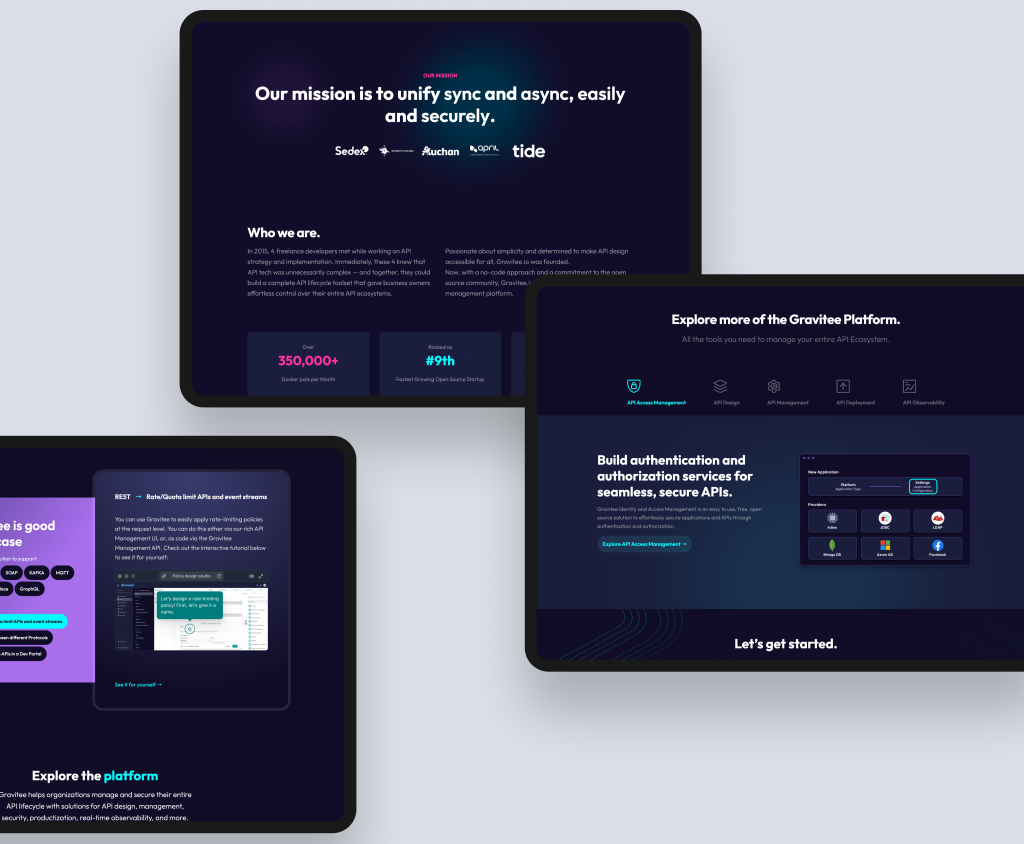
Gravitee is a leading API management platform serving enterprise technology teams globally. Their challenge was one of the most technically demanding in B2B web design: communicating a deeply technical product to a technically sophisticated audience while simultaneously building the business case for the non-technical stakeholders who ultimately approve the purchase. Developers need to see API architecture depth. CTOs need to see scalability and vendor credibility. Procurement teams need to see pricing clarity and compliance credentials.
Why HubSpot CMS was the right choice
Gravitee was already operating on HubSpot CRM and Marketing Hub. The native connection between the website and their CRM was essential: their sales team needed to see which content a prospect had engaged with before a sales conversation, and their marketing team needed attribution data showing which content pieces were contributing to pipeline.
What Rudo built
The redesigned site restructured all content around distinct buyer journeys. A comprehensive resources hub was built with content at different levels of technical depth: developer documentation and API references for engineering evaluators, ROI frameworks and competitive positioning for business buyers, and analyst coverage and case studies for procurement stakeholders. Smart content personalisation was configured to present different CTAs and resource recommendations based on the visitor's role and engagement history.
The template library was expanded so the Gravitee marketing team could build campaign landing pages independently for each audience type and use case, with every page connected to the HubSpot CRM for lead attribution.
Read the full case study: Gravitee case study.
Takeaway
For technical SaaS companies with multiple buyer types, the combination of audience-segmented content architecture and smart content personalisation is the most commercially impactful configuration available on HubSpot CMS. The platform's native CRM connection means sales teams arrive at every conversation with a complete picture of what the prospect has read, watched, and downloaded.
3. Event Footprints: analytics SaaS, CRM-connected lead capture
The challenge
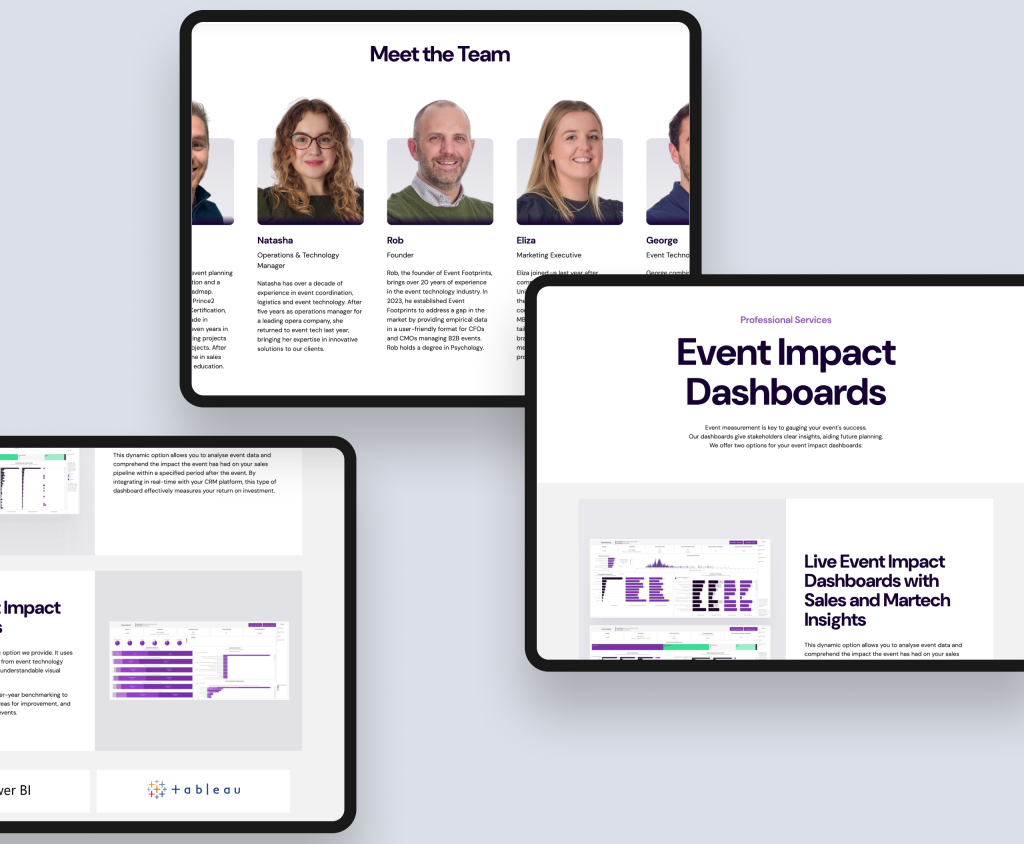
Event Footprints is a B2B SaaS platform that helps businesses measure the ROI of their events through behavioural data and analytics. Their original website failed to communicate their core value proposition clearly. Messaging was vague, navigation was fragmented, and the site was generating traffic that was not converting into qualified pipeline.
Why HubSpot CMS was the right choice
Event Footprints needed their website to integrate tightly with their HubSpot CRM pipeline. Every lead needed to arrive in the CRM with the correct engagement history attached, and their sales team needed real-time notifications when high-intent contacts engaged with specific content.
What Rudo built
The redesigned site on HubSpot CMS restructured content around the specific value Event Footprints delivers at each stage of the event lifecycle. Interactive elements were added to demonstrate the platform's capabilities without requiring a full demo. HubSpot workflows were configured so that sales reps receive automatic notifications when a contact visits the pricing page, downloads the enterprise case study, or engages with the product demo content.
Read the full case study: Event Footprints case study.
Takeaway
Website-triggered sales notifications are one of the most commercially underused capabilities of HubSpot CMS. A sales rep who knows a prospect visited the pricing page three times this week can reach out with a relevant, timely message rather than a generic follow-up. Configure these workflows during the build phase, not as an afterthought.
4. GetGround: PropTech SaaS, audience segmentation
The challenge
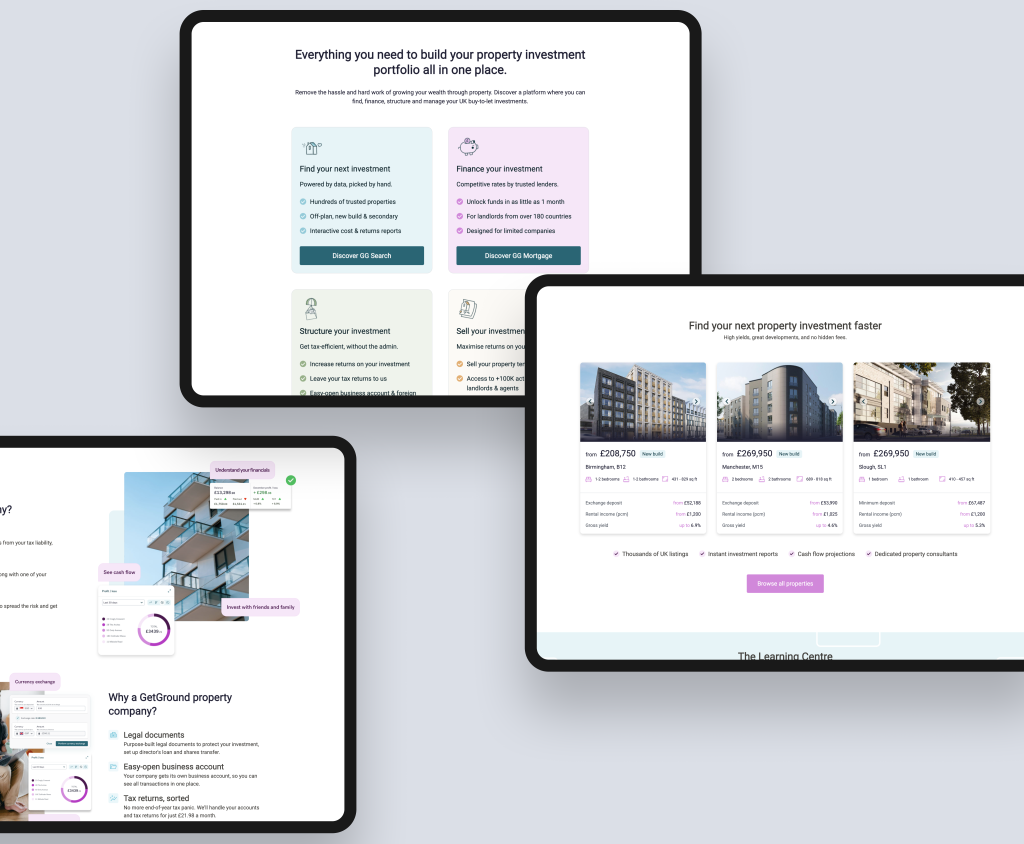
GetGround is the UK's only digital company formation and management platform for buy-to-let property investment. Their challenge was communicating a genuinely novel category to buyers who may be encountering the concept for the first time, while serving three distinct audience types: new investors, experienced landlords, and portfolio builders.
Why HubSpot CMS was the right choice
GetGround needed a platform that could support audience-segmented campaign execution at scale. Their marketing team needed to build campaign landing pages for each audience segment without developer involvement, and connect every lead capture point to their HubSpot pipeline with the audience segment tagged on the contact record.
What Rudo built
The redesigned site created distinct content journeys for each of GetGround's three audience types, with navigation and landing page tracks optimised for each. Modular landing page templates allowed the marketing team to build new campaign pages independently. Every form on the site was configured to populate the correct HubSpot CRM properties including audience segment, traffic source, and campaign attribution.
Read the full case study: GetGround case study.
Takeaway
For SaaS and tech companies serving multiple audience segments, HubSpot CMS's combination of modular landing page templates and CRM property mapping is particularly powerful. Marketing teams can build segment-specific campaign pages quickly, and every lead arrives in the CRM tagged with the segment and campaign source, enabling precise attribution and follow-up.
5. Source Investments: property investment, campaign infrastructure
The challenge
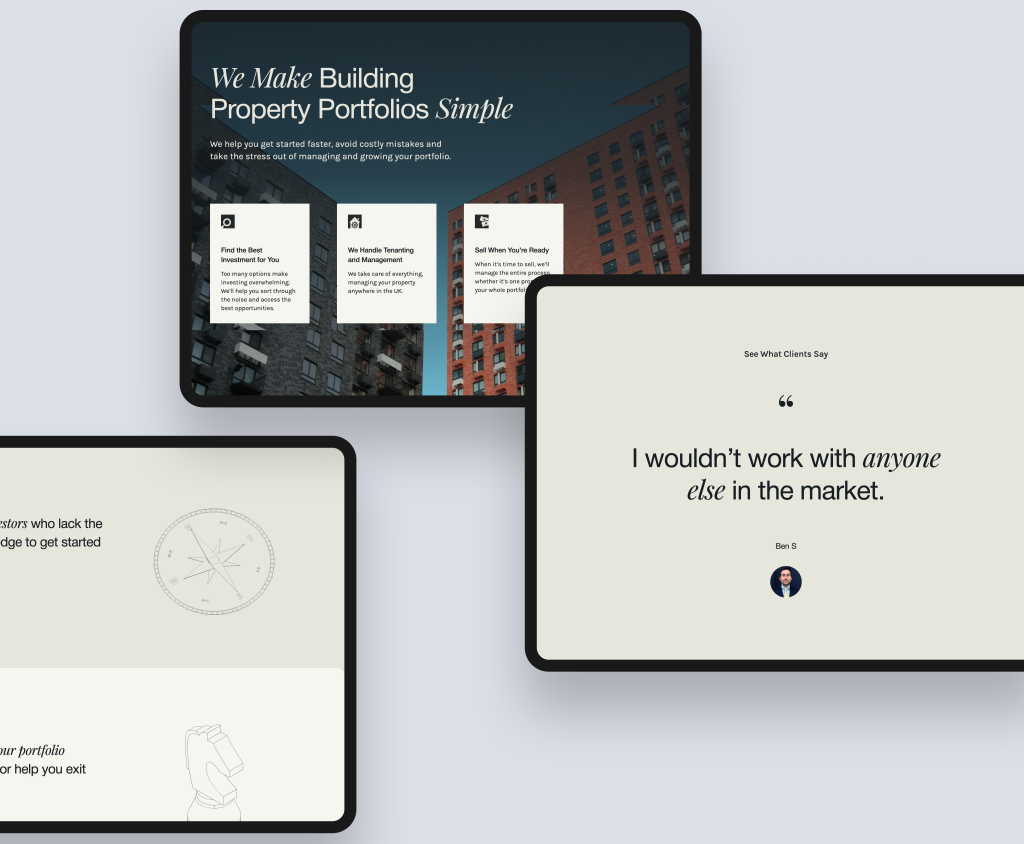
Source Investments is a UK property investment company that had grown significantly but whose website still reflected an earlier, smaller version of the business. Their three-service offering of buying, managing, and selling was not clearly communicated, and the site was not effectively reaching their international buyer audience from Turkey and the UAE.
Why HubSpot CMS was the right choice
Source Investments had recently adopted HubSpot CRM and needed a website that worked hand in hand with it. Their marketing team needed to build campaign landing pages for specific property investment opportunities without developer involvement, and they needed every lead capture point to flow directly into their HubSpot pipeline with campaign attribution.
What Rudo built
Rudo rebuilt the site on HubSpot CMS with a new sitemap structured around audience type rather than service: separate content journeys for UK investors, international buyers, and existing landlords. A modular design system allowed the Source team to build new property campaign pages within the established design framework. Custom HubSpot landing page templates were built for campaign use, with lead routing configured to send each enquiry type to the appropriate team member.
Read the full case study: Source Investments case study.
Takeaway
For property companies with multiple investor audiences and frequent campaign activity, HubSpot CMS's campaign landing page infrastructure is significantly more efficient than building individual pages in WordPress or requesting developer time for each new campaign. The investment in a well-structured template library pays for itself within the first few campaigns.
6. Ten2Two: recruitment, dual-audience, CRM workflows
The challenge
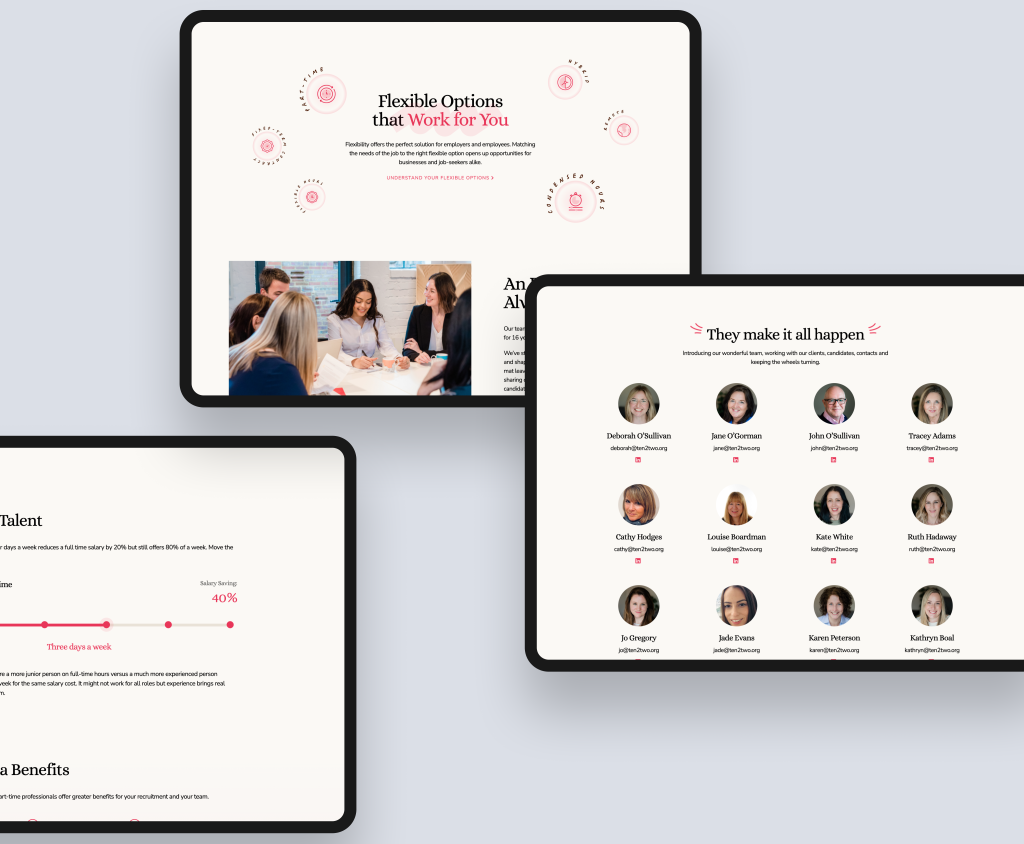
Ten2Two is a UK recruitment agency specialising in flexible and part-time professional roles. Their site needed to serve two fundamentally different audiences simultaneously: employers looking for senior talent on flexible terms, and candidates looking for meaningful work on their own schedule. Each audience has different information needs, different conversion goals, and responds to different messaging.
Why HubSpot CMS was the right choice
Ten2Two needed to route employer and candidate enquiries into separate CRM pipelines with different workflows. An employer enquiry should trigger a different sales sequence than a candidate registration. HubSpot CMS's native CRM connection and workflow engine made this straightforward to configure, where on WordPress it would have required custom plugin development.
What Rudo built
The site was built with distinct navigation paths, content journeys, and conversion points for each audience. Employer pages were designed around the value of flexible talent and led to a consultation request form. Candidate pages were designed around the quality of the opportunities and the flexibility of the working arrangements, leading to a candidate registration form.
Each form was configured to create a contact record in the appropriate pipeline and enrol the contact in the relevant onboarding workflow. The Ten2Two team could immediately see in HubSpot which contacts were employers and which were candidates, with the correct follow-up sequence triggered automatically.
Read the full case study: Ten2Two case study.
Takeaway
For companies with multiple distinct audience types that generate different types of leads, HubSpot CMS's native workflow engine is a significant operational advantage. Separate pipelines, separate sequences, and automatic audience routing configured at build time eliminates the manual sorting and mis-routing that commonly occurs when multiple lead types arrive through a single form.
7. Psomagen: multiomics, content independence
The challenge
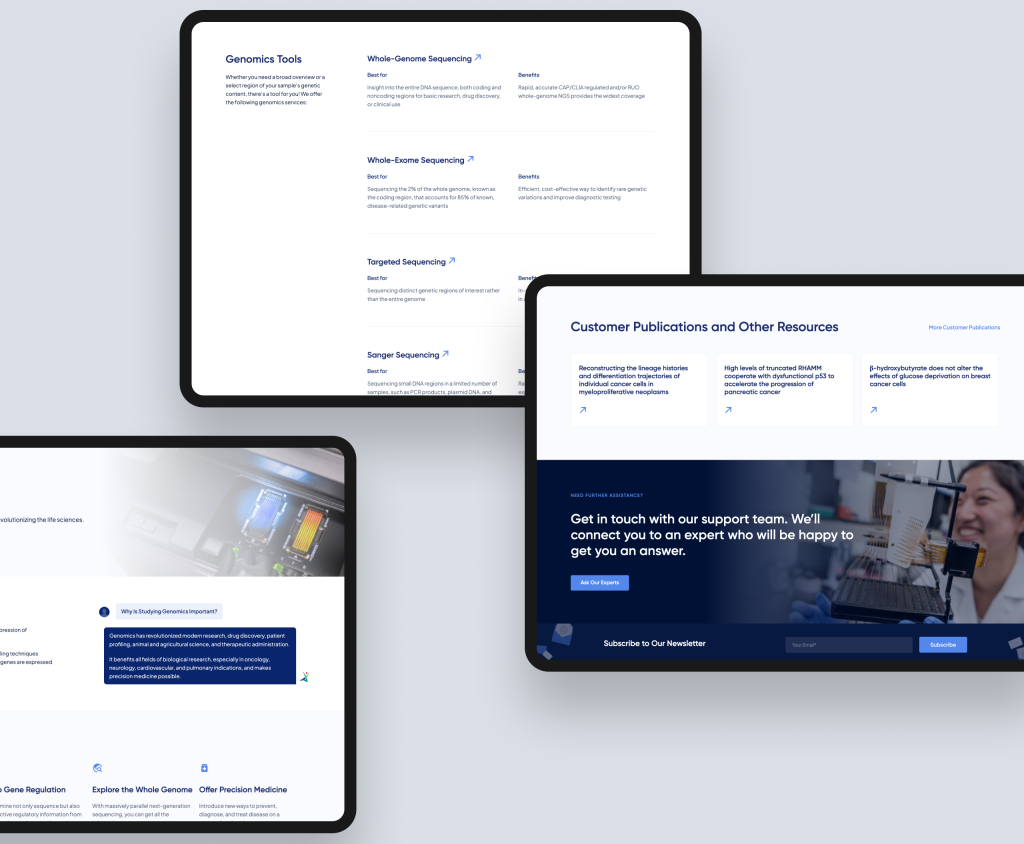
Psomagen is a leading contract research services provider in the field of multiomics, delivering precision-driven research solutions for scientists and clinicians globally. Their existing website failed to serve both audience groups clearly: research scientists and clinical professionals have different information needs, different vocabularies, and respond to different credibility signals.
Why HubSpot CMS was the right choice
Psomagen's primary requirement was a platform their team could manage and update independently without requiring developer involvement for content changes. HubSpot CMS's editing environment, combined with a well-built module library, met this requirement while also providing the integration with HubSpot's marketing tools that Psomagen needed to grow their reach across the research community.
What Rudo built
The redesigned site was built with a strategic sitemap that organised content to guide each audience group clearly to the services most relevant to them. Targeted copy was produced for each major page, and the UI design created a clean, professional interface that communicated credibility to both scientists and clinicians. The module library was built to give Psomagen's team full control over content updates, page structure changes, and the addition of new service pages without any agency involvement.
Read the full case study: Psomagen case study.
Takeaway
HubSpot CMS's value is not only in its CRM integration. For organisations with non-technical marketing teams that need to manage complex, multi-audience content independently, the platform's editing environment and module system provide genuine operational independence that reduces long-term agency dependency.
Ready to talk about your HubSpot website?
Rudo builds HubSpot CMS websites that are commercially connected from day one: CRM-integrated, workflow-configured, and built for marketing team independence. Book an intro call to discuss what a high-performing HubSpot site would look like for your business.
8. What the best HubSpot CMS sites have in common
Across these examples, the highest-performing HubSpot CMS sites share a consistent set of characteristics:
- CRM integration is configured from day one, not retrofitted. Every form, every lead capture point, and every workflow trigger is set up during the build phase. Retrofitting integrations after launch produces gaps in data and attribution.
- The module library gives marketing teams real independence. A well-built module library allows marketing teams to build new pages, update content, and launch campaigns without raising developer tickets. Sites where this was not done well become expensive to maintain.
- Smart content is used purposefully, not comprehensively. The best implementations start with one or two high-impact smart content rules (homepage CTA by lifecycle stage, case study by industry) and expand based on performance data.
- The design system is built for scale. Template and module architecture that accommodates future growth: new industry pages, new product sections, new campaign landing page types, without requiring bespoke development each time.
- Post-launch workflows are planned before launch. The commercial value of HubSpot CMS compounds over time through increasingly sophisticated workflow automation. The sites that benefit most from the platform plan this from the beginning.
Find out more about our HubSpot CMS design and development services.

Written by
Rudo Agency
Rudo is a strategy-led web design and development agency specialising in B2B. Based in the UK and working with clients globally, we help ambitious brands turn complex ideas into high-performing websites. Our team combines digital strategy, UX/UI design, custom development, and SEO to deliver results-focused websites that support real business growth.
